
The Rise of 3D Printers: Transforming Ideas into Reality
In recent years, 3D printers have evolved from niche devices used primarily by engineers and hobbyists into indispensable tools across a wide range of industries. From rapid prototyping and product development to education, healthcare, and small-scale manufacturing, 3D printing is revolutionizing the way we design, create, and innovate.
A 3D printer is a device that constructs physical objects layer by layer based on a digital model. Unlike traditional manufacturing methods— which often involve cutting, drilling, or molding materials—3D printing is an additive process. This means material is only added where it is needed, minimizing waste while enabling the creation of highly complex designs.
3D printers can work with a diverse range of materials, including plastics, resins, metals, and composites. Depending on the type of printer and its intended application, users can produce everything from simple prototypes to fully functional end-use parts.

The 3D printing process typically starts with a digital design created using CAD (Computer-Aided Design) software or downloaded from an online model library. This model is then converted into a printable file and sliced into thin layers using specialized slicing software. The printer follows these precise instructions to build the object one layer at a time.
While the process may sound straightforward, modern 3D printers offer incredible precision and repeatability. This is one of the key reasons they have become increasingly valuable in both commercial and personal settings.
Types of 3D Printers

There are several types of 3D printing technologies, each tailored to specific needs and applications:
1. FDM (Fused Deposition Modeling)
FDM printers are among the most common and affordable options on the market. They work by melting thermoplastic filament and extruding it through a nozzle. These printers are ideal for beginners, educational purposes, and general prototyping tasks.
SLA printers use a light source—usually a laser or LCD screen—to cure liquid resin. They are renowned for producing high-detail prints with smooth surface finishes, making them perfect for jewelry, dental models, and design prototypes.
3. SLS (Selective Laser Sintering)
SLS printers use a laser to fuse powdered materials, typically nylon, into solid structures. This method produces strong, functional parts and is widely used in industrial applications.
One of the biggest advantages of 3D printing is its speed. Designers and manufacturers can quickly turn concepts into physical prototypes, test them, and make improvements—all without the delays associated with traditional tooling.
For low-volume production and prototyping, 3D printers can significantly reduce manufacturing costs. There is no need for expensive molds or specialized tooling, making 3D printing particularly appealing to startups and small businesses.
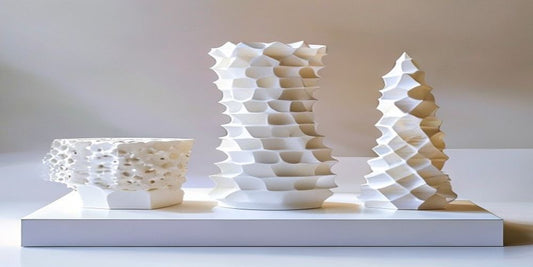
Traditional manufacturing often imposes limitations on what can be created. 3D printing enables the production of complex geometries, lightweight structures, and customized parts that would be difficult or impossible to achieve with conventional methods.
3D printing makes mass customization a reality. Whether it’s personalized medical devices, custom phone accessories, or unique home decor, 3D printers allow businesses to easily meet the specific needs of their customers.
Since 3D printing is an additive process, it typically uses less material than subtractive manufacturing methods. This not only improves efficiency but also supports more sustainable production practices.

The use of 3D printers continues to expand across numerous industries, including:
• Manufacturing: Creating prototypes, tools, jigs, and end-use parts
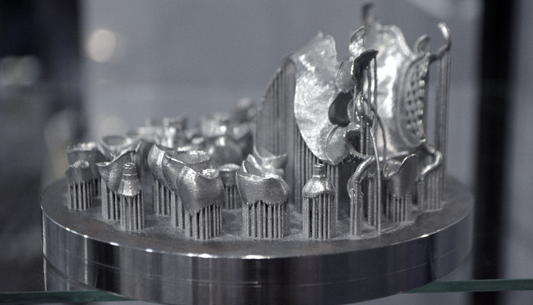
• Healthcare: Producing dental models, prosthetics, surgical guides, and anatomical replicas
• Education: Helping students learn engineering, design, and creativity through hands-on projects
• Architecture: Building high-precision scale models
• Automotive and Aerospace: Developing lightweight components and accelerating design testing
• Consumer Goods: Producing customized accessories, home products, and fashion items
What to Consider When Choosing a 3D Printer
If you’re planning to invest in a 3D printer, there are several key factors to keep in mind:
• Print Quality: Resolution and accuracy are crucial, especially for detailed parts
• Build Volume: The maximum size of the object the printer can produce
• Material Compatibility: Different printers support different types of materials
• Ease of Use: User-friendly software and reliable performance can save time and frustration
• Maintenance: Consider the ongoing costs of parts, upgrades, and consumables
• Application Needs: A printer for educational use will differ significantly from one intended for industrial production
The future of 3D printing is incredibly promising. As technology advances, printers are becoming faster, more precise, and more accessible than ever before. New materials and smarter software are expanding the boundaries of what’s possible, while industries around the world continue to adopt additive manufacturing as a strategic tool.
In the years ahead, 3D printers are likely to play an even larger role in decentralized manufacturing, on-demand production, and sustainable design. Businesses that embrace this technology today will be better positioned to innovate and remain competitive tomorrow.
3D printers are no longer just experimental devices or hobby tools—they have become essential instruments for innovation, helping individuals and businesses turn ideas into tangible products faster and more efficiently than ever before.
Whether you’re a designer, engineer, educator, entrepreneur, or technology enthusiast, investing in 3D printing can open the door to new possibilities. As the technology continues to evolve, its impact on manufacturing and creativity will only grow stronger.
Previous
Strengthen 3D Printing Safety: Metal Powder Explosion-Proof Vacuum Cleaners – More Than Cleaning, It’s Protection
Next
When Ceramic Inks "Lose Control": How Rheomicroscopy Lifts the Lid on the 3D Printing Black Box